

Joyful Chorus
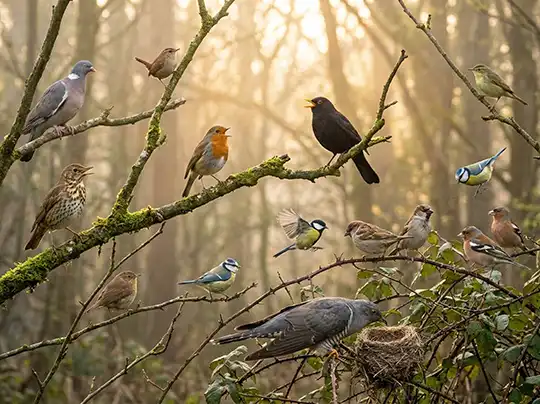 The Dawn Chorus
Surely one of the most beautiful aspects of spring is the incredible variety of birdsong. According to the Woodland Trust, the dawn chorus is at its best between the months of March and July, with its peak during May and June. If you are awake, the first tentative songs begin about an hour before sunrise with Robins, Blackbirds, and Thrushes. Pre-dawn singers include Wood Pigeons, Wrens, and Warblers, with Great Tits, Blue Tits, Sparrows, and Finches joining in only when it becomes light enough for them to see.
Of course, the chorus is all about defending territory and raising young, with the singing coming typically from male birds. Who knew that it takes quite a bit of energy to stand there and sing your heart out? Consequently, only the strongest birds succeed in winning over females and securing the best nesting sites.
New Life
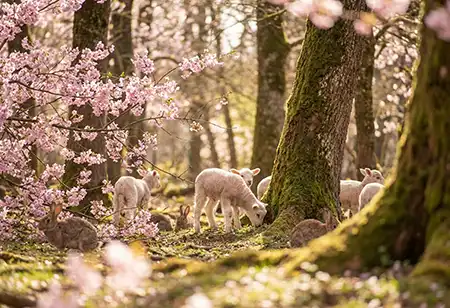 As winter releases its grip, the landscape breaks into vibrant life,
April in the United Kingdom is a month where the physical world mirrors the deepest spiritual truths of the Christian Faith. As winter releases its grip, the landscape breaks into vibrant life, offering a powerful backdrop for the central message of Christianity – resurrection and new life!
Famously, as the saying goes, we have April showers, although perhaps this year we don’t need too many of those before the blooms of May appear.
Of course, for Christians, this April is dominated by Holy Week and Easter, festivals that serve as yearly reminders of the cornerstone of faith. Following the solemnity and personal reflection of Lent, the resurrection of Jesus Christ on Easter Sunday brings an explosion of joy and hope, something sorely needed in the present times with the war in the Middle East and spiralling fuel and energy prices.
It's time for Spring to Spring
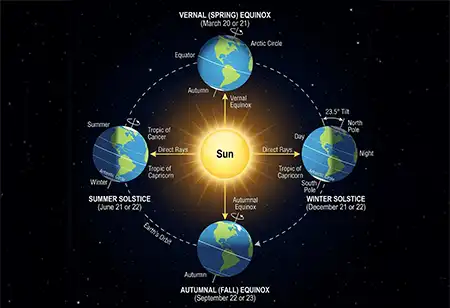 The spring equinox takes place when the Earth’s axis is tilted neither towards the sun nor away from it.
As I sit and write on another gloomy day in February, I cannot help looking forward to March and the meteorological beginning of spring on the first, St David’s Day. All around me is the evidence of the new life waiting to burst from the earth as daffodils, crocus and even primroses defy the wind and the rain. Spring traditionally begins, though, on the Vernal Equinox, which this year falls on 20th March.
The word ‘Equinox’ comes from the Latin, combining the words equi, (equal) and nox, (night). The spring equinox takes place when the Earth’s axis is tilted neither towards the sun nor away from it, giving the impression that day and night last for an equal amount of time.
Equinoxes take place simultaneously in the northern and southern hemispheres, but with the seasons reversed. So, whilst we ring in the spring this March, those south of the equator will be entering astronomical autumn.
February, the Unique Month.
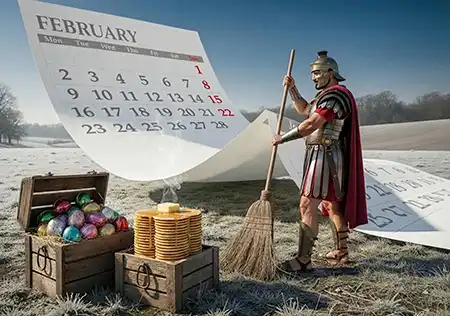 To the Romans, February was a time to clear the land. We prepare for Easter.
February is a unique month. It is the shortest, having twenty-eight days unless of course it is a leap year when there are twenty-nine. In Welsh, it is known as “y mis bach” meaning ‘little month’ and being shorter than the other months, it is possible that February passes without having a full moon.
There is something about February, though, that is a relief after the gloomy days of January. Perhaps it is that it is a short month, or perhaps it is when we begin to notice the lengthening days beckoning us towards the spring.
Of course, we have the Romans to thank for February, who added it together with January to complete their calendar. The word February comes from the Roman Februa, named after a festival of purification that was much like a ‘spring cleaning’ to purge evil spirits and prepare for spring. Traditionally, the land was cleansed or prepared for spring planting.
I cannot help but find it interesting that, even in modern times, there is still a ritual held at this time of year that perpetuates the idea of cleansing and preparing as we enter Lent.
Journeying through the Festival Season
 Journeying through the heart of our tradition
In December you can hardly escape the familiar Christmas songs heard in shops, on the radio and anywhere where music is played over a loudspeaker. To be honest, I love some of the old songs, but one which really springs to mind is ‘Driving Home for Christmas’ by Chris Rea. He wrote it while stuck in holiday traffic, travelling from London to Middlesbrough with his wife in their Austin Mini. Apparently, the record label wouldn’t pay for his train ticket home!
For me, it makes me think of one of my sons driving home on leave, navigating the darkness and weather, along with so many others, in the expectation of the joy of home and family.
This year, even Marks and Spencer is advertising its Christmas goodies with an advert of being on the motorway in a traffic jam at Christmas. Journeying then is something that so many of us are familiar with at this time of year, as an estimated 29.3 million journeys are taken over the Christmas period.